After my first burnout, as I could no longer cope with the stress of working life in Belgium, I decided to spend more time in Morocco with my colleagues, drawn by the much more pleasant climate, the proximity to my workplace and the ocean, a more outdoor-oriented lifestyle, and, above all, genuinely human connections. Once a month, I return to Belgium for a few days to spend time with my children, who are at school there and whom I miss so much.
During one of these trips, I meet B. We get to know each other, chatting and talking endlessly about our many projects, our adventures and misadventures, our numerous passions, our desires, our frustrations, our joys, our hyper-emotional nature, our sense of being different, outside the norm, our sadness, our sorrows, our anger at injustice, our “alien” side, our uncompromising nature, …. . One person’s explanations spark the other’s curiosity, and the other’s anecdotes do the same in return: it’s a real game of tennis, not a match, but genuine pleasure, a sharing of ideas, a source of inspiration. For the first time, I have in front of me someone who understands me, with whom I can develop ideas, share feelings and emotions; someone who, despite a different way of life, is similar to me. I confide in her that I am deeply unsettled at meeting my feminine side in the way we think and experience things.
In reply, B. recommends some books to me, which I hasten to buy and devour in a matter of days….
- Trop intelligent pour être heureux ? L'adulte surdoué (“Too intelligent to be happy? The gifted adult”), by Jeanne Siaud-Facchin
- L'adulte surdoué - Apprendre à faire simple quand on est compliqué (“The gifted adult: learning to keep things simple when you’re complicated”), by Monique de Kermadec
- Moi, surdoué révolté : Journal intime d'un extra-terrestre né sur Terre (“Me, the rebellious gifted one: diary of an alien born on Earth”), by Abel Abelson
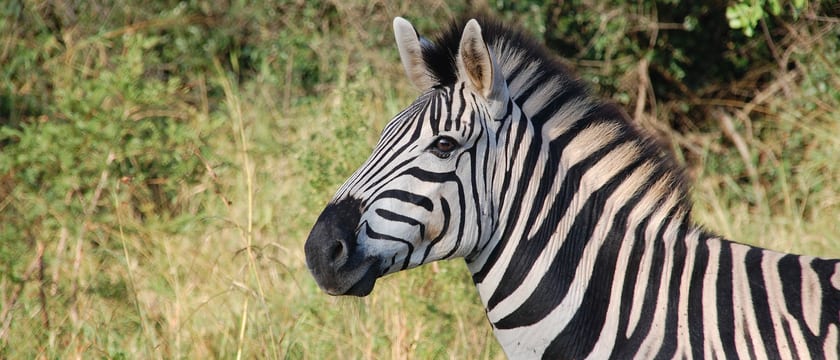
Reading these books, having always felt different, I get the impression that they’re describing my own life. Could I, too, be that “animal” described by Jeanne Siaud-Facchin to refer to intellectually precocious, gifted, or high-potential individuals? I cannot accept being pigeonholed by these heavy-handed definitions, and yet, in an instant, this hypothesis answers the many unanswered questions I have been asking myself since my earliest childhood! It’s obvious: I am a “Zebra”.
B. knew this even before our first meeting; it took me 43 years to discover it and several more months to accept it. B. turned my life on its head, and even though we’ve sadly lost touch since then - which I regret - I thank her from the bottom of my heart for having been the catalyst for the birth of another me, the real me.
But what does this have to do with burnout, you might ask? I am convinced, based on my own experience and the accounts of others in a similar situation - even though there are no official statistics or studies on the matter - that “Zebra” people are more prone to suffering from burnout than the rest of the population.
I could go into more detail on this hypothesis, on the characteristics of Zebras, and those of people prone to burnout, but the subject has already been covered in great detail in Sandra Boré’s excellent article, Zèbres VS burn-out : l’hécatombe (“Zebras vs burnout: the carnage”), which I urge you to read. I shall therefore conclude this article by thanking N. for allowing me to share with you a moving account originally published on a discussion group related to burnout, which in itself illustrates just how prone Zebras are to potentially suffering from burnout.
“Another sleepless night has led me to reflect once more, with the aim of making progress on the path to authenticity, humility, hope and serenity…
Empathy, extreme sensitivity, passion and enthusiasm deemed excessive, a keen sense of truth and justice, a fighting spirit combined with constant guilt and ceaseless self-doubt - these are all characteristics that can create a sense of being different. These character traits complicate professional relationships and can therefore lead to burnout. But they also, I believe, have an impact on romantic relationships.
A highly empathetic person needs to invest in those around them, to be caring, to find solutions and to avoid conflict, because they perceive what others are feeling very intensely. They will invest themselves all the more, adapting excessively to the other person, especially if they are sidelined and criticised. In a relationship, it seems to me that the partner might then tend to shirk responsibility and take advantage of this altruism, without the person realising it, as they will be primarily preoccupied with their partner’s vulnerability, which affects them deeply.
Sensitivity normally enables one to understand the unspoken and the unsaid. Yet this insight sometimes seems to vanish, or at least prove of no use, when the person is confronted with malice.
Indeed, gratuitous malice can leave them feeling helpless, desperately seeking a rational, logical explanation that might justify the indifference, the reproaches, the aggression and the violence to which they are exposed. They will then focus on their own shortcomings and fail to recognise their own qualities and skills.
In some cases, they may remain in an unsatisfactory relationship for many years, simply because they are unaware that they could be treated with greater respect by their colleague(s) or partner.
Being passionate, enthusiastic and having a great thirst for learning can make others feel belittled, highlight their own limitations or their lack of willingness to learn, and ultimately turn them into enemies.
Being driven by an unwavering passion and persevering despite various obstacles can lead to exhaustion, often without us realising it.
Furthermore, the ability to endure the unbearable whilst always picking oneself up again, to keep smiling despite the storm, and to find constructive solutions in the face of life’s adversities, will sometimes encourage some people to take advantage of our capabilities.
A person with a keen sense of justice and truth, who cannot understand how anyone could deviate from these principles and cause harm or be cruel, will continually seek not only to rectify a situation they find unacceptable, but also to believe themselves to be at fault, since, in their view, the other person cannot possibly “act wrongly”.
Finally, creativity can be unsettling and lead to being labelled an “oddball”. Some may even try to thwart creative projects, which inevitably results in damaged self-esteem.
It is very painful to realise that one is, or has been, the victim of a toxic relationship. It is often necessary to seek help from a therapist, not only to come to this realisation but also to overcome this ordeal. This involves developing or possessing a certain strength of character and, above all, self-confidence - precisely what had been lacking until then. It also involves coming to terms with the loss of the relationship as one had envisaged, or even idealised, it.
When one manages to extricate oneself from this situation, one demonstrates resilience.
After discussion and reflection, I believe that this is ultimately a wonderful path; a path that will lead some to find a fulfilling career, and others to find someone who loves them just as they are and is prepared to support them rather than put them down.
What do you think?”
Please feel free to share your comments or questions via the “Un Autre Moi” Facebook page; I’ll be delighted to read them and reply.