
Coaching
Certified professional coach in Belgium: one-to-one, group and corporate coaching. Burnout, career and stress support. Sessions from €60 incl. VAT.
What is coaching?
Coaching is personalised support, provided by a coach to the coachee (an individual, a group of people or an organisation).
The coaching profession can be defined as the art of supporting others. It enables the coachee to get to know themselves better, acquire new resources and skills, find their own solutions, overcome difficulties and get past obstacles, improve performance, develop their full potential, define and achieve their personal or professional goals, gain autonomy and so flourish and develop personally.
Coaching is a privileged relationship between a coach and a coachee. It is based on trust, non-judgement, empathy and confidentiality, and is protected by the coach's code of ethics. The nature of this relationship is set out in a coaching contract, oral and tacit in one-to-one coaching and written in corporate coaching.
What is a coach?
The profession of coaching is not currently regulated; consequently, the term ‘coach’ is, unfortunately, very often misused and appropriated by many untrained individuals who practise coaching. In contrast, a professional coach has completed a certified training programme and continues to undertake further training and receive supervision at a certified training centre.
The professional coach is someone who listens without judging. They do not advise, they do not instruct, they do not influence. They are neither a mentor nor a therapist and offer no miracle solution. They ask questions, they stimulate, they challenge. Using a range of tools and exercises, they lead their client to ask themselves the right questions, to become aware of their own, often unrecognised resources and to acquire new abilities. They help their client to turn limiting obstacles, beliefs and behaviours into strengths. The coach supports the coachee in developing their full potential so that they can achieve their goal(s) ecologically, for themselves and those close to them, in line with their values.
Coach or therapist?
A coach is not a healthcare professional,
a coach is a personal development professional.
A coach therefore cannot make any diagnosis and must refer a person to a doctor or a qualified clinical psychologist if they show alarming symptoms (depression, burnout, trauma, mental disorders, addiction, …). Coaching therefore has no therapeutic aim but is very effective in supporting such a process. It proves to be an excellent complement for coping better with treatment or bringing about a change in behaviour that benefits health.
Therapy emphasises the reasons and the “why?” of things.
Coaching emphasises the goal to be achieved and “how to succeed?”.
Who is coaching for?
Coaching is aimed at anyone in good health, regardless of gender, age, social status or whether they are seeking support individually or as part of a group:
- Women, men
- Children, teenagers, adults, older people
- Students, jobseekers, manual workers, employees, office staff, artists, craftspeople, sportspeople, self-employed people, managers, business owners
- Individuals, couples, families, groups, associations, organisations, companies
What are the different types of coaching?
Depending on its individual or collective form and on the goal sought, centred on the person or the situation, Un Autre Moi offers you several types of coaching:









What are the specialisms of “Un Autre Moi” coaching?
Drawing on my varied experience and training, Un Autre Moi has specialised in the following areas:
- The prevention of burnout, support after burnout and management of stress, for self-employed people, professionals and owners of small and medium-sized enterprises (SMEs).
- people with high intellectual potential and/or high emotional potential (HP/HPI/HPE),
- communication and interpersonal and inter-team relationships in a technology environment (IT).
- mental preparation for amateur or experienced sportspeople.
How does a coaching process work?
A coaching process always begins with an enquiry and an initial session, during which the details of the process are agreed (venue, description, duration and frequency of sessions, fees, cancellation policy, definition of progress indicators, code of ethics, etc.).
On the basis of the request, a clear and precise goal is defined so that the coachee can quickly achieve results and become autonomous.
How long does a coaching process last?
The duration of the coaching process depends mainly on the objective to be achieved, the length of the sessions and the frequency of the sessions. As the aim of the coaching process is to achieve positive results and foster the coachee’s autonomy, if the objective is ambitious, it is essential to break it down into more easily achievable intermediate goals. Experience shows that the vast majority of objectives are achieved within a few sessions, and sometimes a single session is sufficient.
“Un Autre Moi” coaching sessions are 60 minutes long and 10 to 15 days apart. The coaching process ends when the goal is reached and the process has been evaluated. The coachee may stop the coaching process at any time; the coach makes sure it is not an avoidance strategy.
Where and when do the sessions take place?
Sessions take place by appointment only, between 10 a.m. and 6 p.m., Monday to Friday.
-
In one-to-one coaching
-
By video conference
Sessions are increasingly taking place remotely, using the Zoom video-conferencing app. In this case, you are asked to choose a suitable location: somewhere quiet, in an environment where you feel at ease, away from distractions and interruptions.
-
At the consultation addresses
-
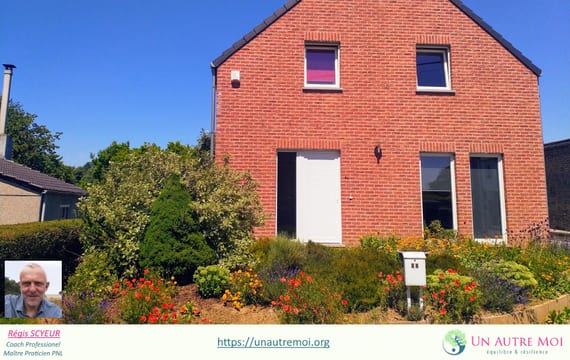
Rue de la Sarthe, 8a
4217 Héron
Monday to Thursday, 10 a.m. to 7 p.m.
3 km from junction 8 or junction 9 on the E42 between Andenne and Huy
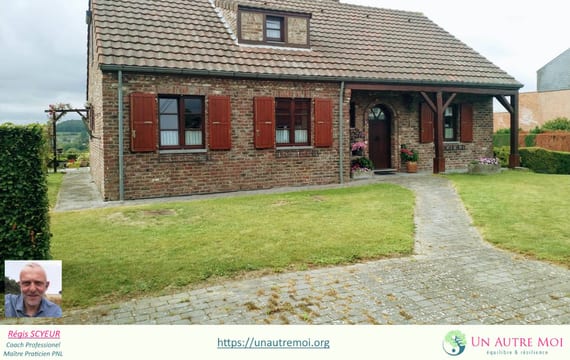
Rue des Roches, 26
5651 Somzée
Fridays, 10 a.m. to 7 p.m.
on the N5, halfway between Philippeville and Charleroi
-
In group coaching
Sessions take place on Saturday mornings, on regular dates announced in the events on the “Un Autre Moi” Facebook page.
-
In corporate coaching
Sessions are organised according to the client's wishes.
How much does a coaching session cost?
The price of one-to-one sessions is €60 incl. VAT per one-hour session.
The price of a couples session is €100 incl. VAT per one-hour session.
Group sessions or workshops are organised for groups of 5 to 8 people at most. The fee depends on the number of participants and the duration, with a basic hourly rate of €60 incl. VAT + €30 incl. VAT per person.
The fee for corporate coaching is always set on the basis of a quotation drawn up, after a free meeting of up to 2 hours with the client, to determine the terms of the assignment (duration, frequency, location, type of coaching, number of participants (individuals or groups)).
Training, experience and certifications
-
September 2020, coaching specialisation module: “Conflict management”, awarded by Institut Horizons 347
-
May 2020, coaching specialisation module: “Identify - avoid - get out of burnout”, awarded by Institut Horizons 347
-
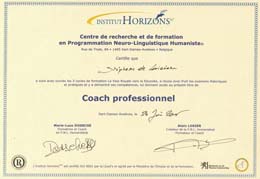
December 2019: after a 14-month training course, Régis SCYEUR successfully obtains his certification as a professional coach and master practitioner in Humanistic NLP, awarded by the research and training centre for neuro-linguistic programming, Institut Horizons 347 (now Next You), ISO 9001 certified by Lloyd's and approved by the Ministry of Employment and Training.
Code of ethics
To guarantee our clients a quality service, you will find our professional code of ethics below.
General professional conduct
- Present a positive image of the coaching profession
- Present oneself clearly according to one's skills
- Respect the different approaches to the profession as well as intellectual property
- Respect the ecology of the parties involved
- Seek professional help if necessary
- Ensure the traceability of the work carried out, accurately and in confidence
Professional conduct towards clients
- Define the limits of the professional relationship clearly (stay within the professional framework)
- Build clear agreements with clients and honour them within the professional coaching relationship
- Make sure from the outset that the client understands the nature of coaching, the framework of confidentiality, the financial arrangements and the other terms of the contract
- Accept no assignment for which the coach is not qualified to serve the interests of the person entrusting it as well as possible. Where necessary, the coach will guide the coachee towards a qualified professional who can meet their request
- Aware of their position, the coach will work to enable the coachee to become independent as quickly as possible
- The coach will guide and advise their client according to their specific request and will leave responsibility for their decisions with the client
- Before each intervention, the coach will take into account the ecology of the client's request (respect for the client's integrity and for their professional, relational and personal environment)
- The coach will inform the client (on the basis of the information available) of the possible consequences of their process of change. They will adapt their intervention with respect for the coachee's stages of development
- The coach will carry out no intervention without the explicit agreement of their client. They will refrain from giving their own solution, but will help their client find theirs
- The coach will respect the client's right to end the coaching at any point in the process
Respect and confidentiality
- The coach will respect the confidentiality of what their client and any partners say, unless expressly authorised by them or required otherwise by law
- The coach will not accept, within the scope of their specific assignment and without the client's knowledge, any remuneration of any kind other than that agreed with their client
- The coach will show complete loyalty to their client in all circumstances
Conflicts of interest
- The coach will obtain their clients’ consent before disclosing their identity or any information that could identify them
- Coaching is practised with regard to the balance between the interests of the coachee and those of their organisation. The coach may report on their work to the commissioning party only within the limits agreed with the coachee
- The coach will take care to avoid any conflict between their own interests and those of their clients. In the event of a possible conflict, the coach will set out the situation openly and discuss fully with their client how to deal with it
Established supervision
- Professional coaching practice requires supervision whenever the situation demands it. The coach will therefore ensure they are supervised if necessary.
Solidarity coaching
The aim of coaching is to enable everyone to develop personally. It is not unusual to find that people in financial difficulty are very often the ones who most need support.
Un Autre Moi practises solidarity coaching:
- Clients who wish to may donate, in whole or in part, the price of a solidarity one-to-one coaching session.
- Anyone without sufficient financial resources to use a conventional coaching service can, simply by asking when booking an appointment, benefit from solidarity coaching in return for a personal contribution of €10 per one-hour session.